Overview
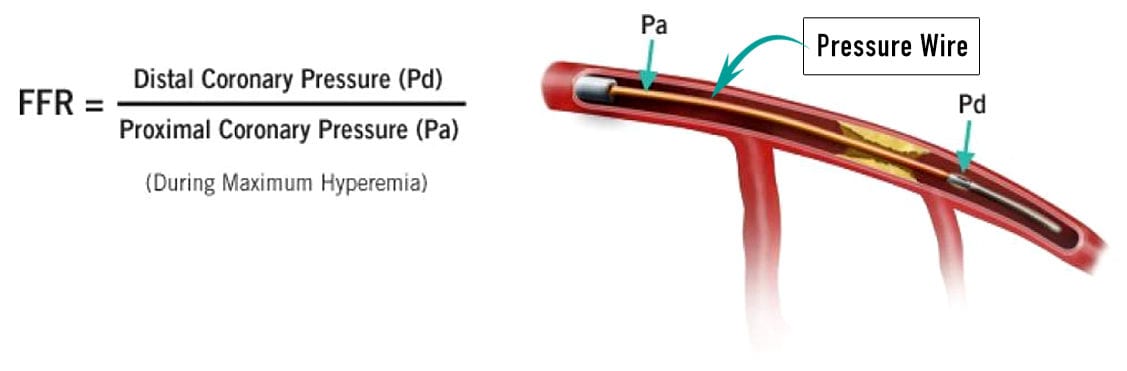
Not every narrowing seen on an angiogram needs a stent. Fractional flow reserve (FFR) and related tests (iFR, RFR, DFR and the wire-free QFR) measure pressure across the blockage to tell whether it actually reduces blood supply to the heart muscle.
If the blockage is not significant, it can be safely treated with medicines alone. This evidence-based approach is central to Dr. Senthilnathan's practice.
Who may need it
- Intermediate (40–70%) blockages on angiography
- Multiple blockages where the culprit needs to be identified
- Patients without clear symptoms where the benefit of stenting is uncertain
What to expect
- A very thin pressure-sensing wire is passed beyond the blockage during angiography.
- Pressures before and after the narrowing are compared, sometimes after a medicine that increases blood flow.
- The result guides the decision immediately — stent or medicines.
Recovery & aftercare
- Adds only minutes to the angiogram; recovery is unchanged.
Medically reviewed by Dr. G.V. Senthilnathan, MBBS, MD (General Medicine), DM (Cardiology). This page is general information; your treatment plan will be tailored to your own reports and health.